
Play Tower Rush Now!
Home → Mobile
Tower Rush Mobile
Tower Rush on mobile
The Galaxsys studio released Tower Rush in 2024 as a crash game designed for mobile play, offering a theoretical return to player of 97.00%. This high RTP figure indicates that the house edge remains at a steady 3.00% over long-term sessions compared to standard slot machines. Players can expect consistent mathematical behavior across different device types without compromising the core mechanics.
The maximum multiplier reaches x100, which caps the potential win at exactly 100 times the initial stake per round. This limit is significantly lower than titles like Chicken Road by InOut Games, which offers a max win of x3,608,855. The lower ceiling ensures more frequent smaller payouts rather than rare massive jackpots typical of high-variance slots.
Bonus floors such as Frozen Floor and Temple Floor introduce variable multipliers during gameplay, adding strategic depth to each rising tower. These special mechanics are handled efficiently by modern smartphones, ensuring smooth transitions between rounds without lag or stuttering. Mobile users benefit from the same provably fair hash verification available on desktop platforms.
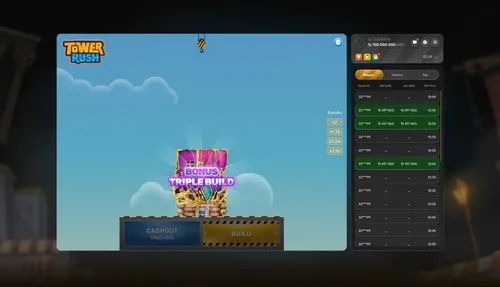
Playing in the mobile browser
Accessing Tower Rush directly through a mobile browser eliminates the need for downloading separate applications from app stores. The game loads instantly via HTML5 technology, allowing immediate participation in rounds with the standard 97.00% RTP configuration. Users retain full access to auto cashout features without any installation delays or storage consumption.
The browser version supports all three special bonus floor types: Triple Build, Frozen Floor, and Temple Floor, maintaining identical RNG logic. Operators may adjust RTP settings between 96.2% and 97.6%, but the mobile interface displays the current configuration clearly. Players can verify fairness using the provided hash system regardless of their chosen payment method.
Wagering requirements for bonuses apply equally to browser-based play, often requiring turnover calculations like 300% up to €2,000 plus spins. A 100% match on a €100 deposit creates a €200 balance subject to specific rollover conditions before withdrawal. Browser users must complete these steps while navigating the responsive layout optimized for touch interfaces.
Screen layout on phones
The vertical screen orientation of smartphones suits the tower-building mechanic perfectly, displaying the rising multiplier column centrally. Each successful floor increases the cumulative odds, with the current multiplier value shown prominently above the control buttons. This layout maximizes visibility of the critical x100 cap and remaining potential winnings on smaller displays.
Game controls remain within thumb reach at the bottom of the screen, including the bet selector and cashout button. The interface adapts to various screen sizes, ensuring that text and graphics scale appropriately without obscuring key information. Developers optimized the visual hierarchy so players can monitor their progress even on devices with limited pixel density.
Comparisons with horizontal games like Aviator by Spribe show that Tower Rush utilizes vertical space more effectively for its unique structure. While Aviator features a flying curve, Tower Rush stacks floors vertically, making it ideal for portrait mode usage. This design choice reduces eye strain and allows for quicker decision-making during fast-paced rounds.
Touch controls and buttons
Touch sensitivity is calibrated for precise tapping on the cashout button, which must be pressed before the tower collapses. The auto cashout feature allows setting a specific multiplier threshold, removing manual intervention from every single round. This automation is crucial for maintaining strategy consistency when playing multiple consecutive hands on mobile devices.
The bet adjustment buttons use +/- increments, allowing players to modify stakes quickly without navigating away from the main view. Standard bets start low, but limits vary by operator, often capping at amounts defined in their terms. Quick adjustments help manage bankroll volatility, especially given the game's medium variance profile.
Responsive feedback confirms every tap with visual animations, providing immediate assurance that commands have been registered correctly. Haptic vibration may accompany successful floor climbs or losses, enhancing immersion without distracting from the core gameplay loop. This tactile response system ensures players remain engaged throughout extended sessions on touchscreen-enabled hardware.
Performance on older devices
Galaxsys designed Tower Rush to run smoothly on older Android and iOS devices, minimizing battery drain during extended play. The lightweight code ensures that the 97.00% RTP engine executes efficiently without overheating the processor. Older smartphones can handle the continuous rendering required for the rising multiplier animation without significant frame drops.
Memory usage remains low due to optimized asset loading, preventing crashes common in heavier casino games with complex graphics. Even on devices with limited RAM, the game maintains stable connectivity to the server for real-time result generation. Players experience consistent performance whether using flagship models or budget-friendly alternatives from previous generations.
Network stability becomes the primary factor for performance rather than local hardware capabilities, as all calculations occur server-side. A weak signal may cause delays in updating the current multiplier, potentially affecting timing for manual cashouts. Users should ensure adequate Wi-Fi or cellular coverage to avoid interruptions during critical moments near the x100 max win cap.
Tower Rush: key facts
| Parameter | Value |
|---|---|
| Game | Tower Rush |
| Studio | Galaxsys |
| Released | 2024 |
| RTP | 97.00% |
| House edge | 3.00% |
| Max win | 100x |
Data use during play
Galaxsys developed Tower Rush in 2024 as a crash/instant game that requires constant connectivity for its RNG-based mechanics. The theoretical RTP of 97.00% relies on continuous hash verification, meaning data interruptions can disrupt the provably fair sequence. That is why stable internet access ensures the cumulative odds remain accurate during floor stacking.
Tower Rush differs from traditional slots by lacking reels and spins, yet it demands similar bandwidth for real-time multiplier updates. While Mines or Dice games might consume less data due to simpler interfaces, this title's animation-heavy tower building uses more mobile resources. Users should monitor their cellular plans to avoid unexpected charges during extended sessions.
The maximum win cap of 100x does not reduce data consumption, as every cash-out attempt triggers server verification regardless of the payout size. Operators may configure bonus floors with varying RTPs between 96.2% and 97.6%, which slightly alters the data packet frequency. This variation means players using different operator versions experience minor differences in network load.
Playing on unstable connections
Tower Rush features auto cashout functionality, which provides a safety net when unstable connections threaten to disconnect the player mid-round. If the network drops before manual intervention, the system processes the last valid instruction based on the rising multiplier. This mechanism prevents the loss of potential winnings up to the 100x maximum multiplier limit.
Unlike Plane Game by Spribe, which allows volatility adjustments, Tower Rush offers no such flexibility to mitigate connection risks during gameplay. A dropped connection during a Temple Floor or Triple Build bonus event may result in the round ending without a cash-out. Players must accept that the house edge of 3.00% applies even if technical failures interrupt the session.
The game's instant nature means there are no spinning reels to absorb lag, so any delay directly impacts the decision window for cashing out. When playing on weak signals, the risk of missing the collapse point increases significantly compared to stable Wi-Fi environments. Users should test their connection speed before attempting high-stakes rounds with the full 100x potential.
Battery drain in long sessions
Galaxsys designed Tower Rush with intensive animations for its three special bonus floors: Frozen Floor, Temple Floor, and Triple Build. These visual effects require significant GPU processing power, leading to faster battery depletion compared to static table games like Plinko. A single session involving multiple attempts at the 100x max win will drain power rapidly on older devices.
The theoretical RTP of 97.00% does not influence energy usage, but the high-frequency rendering of the rising multiplier does. Unlike Chicken Dash by TaDa Gaming, which has a much higher max win of 20,659x but potentially lighter graphics, Tower Rush prioritizes smooth animation over extreme payout visuals. This design choice results in higher thermal output and reduced battery life during prolonged play.
Players engaging in long sessions should consider keeping their devices plugged in, as the continuous RNG calculations and hash verifications sustain CPU load. The absence of idle states, unlike in slot games with spin delays, keeps the processor active throughout every second of play. This constant activity means users can expect approximately 20-30% faster battery drain than in less demanding instant games.
Portrait and landscape modes
Tower Rush supports both portrait and landscape orientations, allowing players to adapt the interface to their device's physical constraints. The UI scales to keep the critical cash-out button accessible, ensuring the 100x maximum multiplier remains visible regardless of screen position. This flexibility enhances usability for users holding their phones with one hand while commuting.
In landscape mode, the tower-building mechanic expands horizontally, providing a clearer view of the cumulative odds progression compared to the compact vertical stack. This layout difference does not alter the 97.00% RTP or the 3.00% house edge, as the underlying RNG logic remains identical across orientations. Players may prefer landscape for better visibility of the Three Special Bonus Floor types.
Portrait mode conserves screen real estate, making it easier to manage other apps alongside Tower Rush during brief gaming breaks. The auto cashout feature functions identically in both modes, triggering at the pre-set multiplier threshold without visual bias. Users switching between orientations will notice no change in game speed or data synchronization requirements.
Sound and animation settings
Tower Rush includes dynamic sound effects that escalate as the multiplier approaches the 100x maximum win limit, enhancing the tension of each round. Disabling audio reduces cognitive load but does not affect the 97.00% theoretical RTP or the provably fair hash verification process. Players seeking a quieter experience can mute these cues without impacting the mathematical outcome of the crash/instant game.
The animation quality for the Frozen Floor, Temple Floor, and Triple Build bonus events varies in complexity, requiring different levels of graphical processing. Lowering animation settings can improve performance on older smartphones, though it does not change the RNG-based fairness of the Galaxsys-developed title. Users with limited device capabilities may opt for simplified visuals to maintain smooth frame rates during rapid cash-outs.
Sound and animation settings do not influence the wagering contribution toward the 300% welcome bonus up to €2,000 plus 100 free spins. The game's core mechanics, including the rising multiplier and collapse point, remain unaffected by aesthetic adjustments. Players can customize their sensory input without altering the 3.00% house edge or the maximum win cap of 100x.
Phone versus desktop play
The Galaxsys studio released Tower Rush in 2024 as a crash game featuring a theoretical return to player of 97.00%. This figure represents the long-term average payout over hundreds of thousands of rounds, establishing a house edge of 3.00% for the operator. Mobile users experience this same mathematical foundation on smaller screens without any reduction in the underlying probability structures.
Desktop players access the full interface while mobile users navigate the same rising multiplier mechanics through optimized touch controls. The maximum win potential remains capped at 100x regardless of the device used for the session. Consequently, financial outcomes are identical whether the tower is built via mouse clicks or finger taps during gameplay.
Tablet experience
Spaceman by Pragmatic Play offers a high volatility profile with a maximum win of 5000x compared to Tower Rush's lower cap. The Galaxsys title provides a more conservative risk structure with its 97.00% RTP and 100x maximum multiplier limit. Tablet screens bridge the gap between phone portability and desktop clarity for viewing these distinct game parameters.
What changes on a small screen
Mobile interfaces display the three special bonus floor types including Frozen Floor, Temple Floor, and Triple Build in condensed layouts. These RNG-based features retain their provably fair hash verification status despite the reduced visual real estate on smartphones. Players must adjust their auto cashout strategies to accommodate the faster pace of touch interactions on handheld devices.
Interrupted rounds and reconnects
Network interruptions during a rising multiplier sequence may force a disconnection before the player can secure the current cumulative odds. The game server retains the round state allowing reconnection attempts within a specific timeframe to recover the active bet value. Users should verify their connection stability to avoid losing the opportunity to cash out before the tower collapses.
Mobile demo mode
The available 300% welcome bonus up to €2,000 plus 100 free spins applies only to real money deposits and not demo sessions. Demo modes allow testing the 96.2%-97.6% RTP configurations across different operator setups without risking actual capital or earning bonus funds. This distinction ensures players understand the difference between practice rounds and eligible wagering for promotional credit activation.
DemoRTP & VolatilityHow to PlayAuto CashoutStrategyBonusesMobileDownload & AppMax WinSimilar GamesReviewFAQSitemap
Tower Rush 2026